绑定到 UXML 模板
版本:2021.3+
此示例演示了如何使用 UXML 模板设置绑定路径。
示例概述
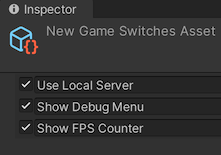
此示例创建了一个资源菜单项。该菜单创建一个 GameSwitch 资源,其中包含三个绑定到 GameSwitch 对象属性的模板实例。
您可以在此 GitHub 代码仓库中找到此示例创建的完整文件。
先决条件
本指南适用于熟悉 Unity 编辑器、UI 工具包和 C# 脚本的开发者。在开始之前,请熟悉以下内容:
创建 GameSwitch 资源
创建脚本以定义 GameSwitch 结构,并创建一个自定义资源来保存 GameSwitch 结构的属性。
使用任何模板在 Unity 中创建项目。
在项目 (Project) 窗口中,创建一个名为
bind-uxml-template的文件夹来存储所有文件。-
创建一个名为
GameSwitch.cs的 C# 脚本,并将其内容替换为以下内容:using System; [Serializable] public struct GameSwitch { public string name; public bool enabled; } -
创建一个名为
GameSwitchesAsset.cs的 C# 脚本,并将其内容替换为以下代码:using UnityEngine; [CreateAssetMenu(menuName = "UIToolkitExamples/GameSwitches")] public class GameSwitchesAsset : ScriptableObject { public GameSwitch useLocalServer; public GameSwitch showDebugMenu; public GameSwitch showFPSCounter; // Use the Reset function to provide default values public void Reset() { useLocalServer = new GameSwitch() { name = "Use Local Server", enabled = false }; showDebugMenu = new GameSwitch() { name = "Show Debug Menu", enabled = false }; showFPSCounter = new GameSwitch() { name = "Show FPS Counter", enabled = true }; } }
创建 UXML 模板和文件
创建一个可用于每个 GameSwitch 结构实例的 UXML 模板以及使用该模板的 UXML 文件。
-
创建一个名为
game_switch.uxml的__ UI__(即用户界面,User Interface)让用户能够与您的应用程序进行交互。Unity 目前支持三种 UI 系统。更多信息
See in Glossary 文档,并将其内容替换为以下内容:<UXML xmlns="UnityEngine.UIElements" xmlns:ue="UnityEditor.UIElements"> <Box style="flex-direction: row;"> <Toggle binding-path="enabled" /> <TextField binding-path="name" readonly="true" style="flex-grow: 1;"/> </Box> </UXML> 在 bind-uxml-template 文件夹中,创建一个名为
Editor的文件夹。-
在 Editor 文件夹中,创建一个名为
game_switches_editor.uxml的 UI 文档,并将其内容替换为以下内容:<UXML xmlns="UnityEngine.UIElements" xmlns:ue="UnityEditor.UIElements"> <Template name="switch" src="../game_switch.uxml"/> <Instance template="switch" binding-path="useLocalServer" /> <Instance template="switch" binding-path="showDebugMenu" /> <Instance template="switch" binding-path="showFPSCounter" /> </UXML>注意:这是自定义编辑器的主 UXML 文件。每个属性都通过
Instance的binding-path属性绑定到game_switch.uxml实例。
创建资源菜单和资源
创建一个脚本来为 GameSwitchesAsset 注册自定义编辑器。
-
创建一个名为
GameSwitchesEditor.cs的 C# 脚本,并将其内容替换为以下内容:using UnityEditor; using UnityEngine; using UnityEngine.UIElements; namespace UIToolkitExamples { [CustomEditor(typeof(GameSwitchesAsset))] public class GameSwitchesEditor : Editor { [SerializeField] VisualTreeAsset visualTreeAsset; public override VisualElement CreateInspectorGUI() { return visualTreeAsset.CloneTree(); } } } 在
GameSwitchesEditor.cs的检视 (Inspector) 窗口中,将game_switches_editor.uxml文件分配给 Visual Tree Asset 字段。
测试绑定
- 在 Unity 中,选择资源 (Assets) > 创建 (Create) > UIToolkitExamples > GameSwitches,在项目的
Assets文件夹中创建新资源。 - 选择新创建的资源。检视面板 (Inspector) 显示绑定到
GameSwitchesAsset.useLocalServer、GameSwitchesAsset.showDebugMenu和GameSwitchesAsset.showFPSCounter属性的开关和文本字段。