不使用绑定路径进行绑定
版本:2021.3+
您可以调用 BindProperty() 将元素直接绑定到 SerializedProperty 对象,而不是使用绑定路径。此示例演示了如何通过 BindProperty() 进行绑定。
示例概述
此示例创建了一个自定义编辑器窗口来更改游戏对象的名称。
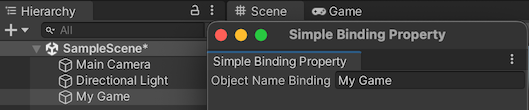
您可以在此 GitHub 代码仓库中找到此示例创建的完整文件。
先决条件
本指南适用于熟悉 Unity 编辑器、UI 工具包和 C# 脚本的开发者。在开始之前,请熟悉以下内容:
与 BindProperty() 绑定
在 C# 中创建一个带有 TextField 的自定义编辑器 Editor 窗口。查找游戏对象的名称属性,然后直接使用 BindProperty() 方法绑定到该属性。
在项目 (Project) 窗口中,创建一个名为
bind-without-binding-path的文件夹来存储文件。在 bind-without-binding-path 文件夹中,创建一个名为
Editor的文件夹。-
在 Editor 文件夹中创建一个名为
SimpleBindingPropertyExample.cs的 C# 脚本,并将其内容替换为以下代码:using UnityEditor; using UnityEngine; using UnityEditor.UIElements; using UnityEngine.UIElements; namespace UIToolkitExamples { public class SimpleBindingPropertyExample : EditorWindow { TextField m_ObjectNameBinding; [MenuItem("Window/UIToolkitExamples/Simple Binding Property Example")] public static void ShowDefaultWindow() { var wnd = GetWindow<SimpleBindingPropertyExample>(); wnd.titleContent = new GUIContent("Simple Binding Property"); } public void CreateGUI() { m_ObjectNameBinding = new TextField("Object Name Binding"); rootVisualElement.Add(m_ObjectNameBinding); OnSelectionChange(); } public void OnSelectionChange() { GameObject selectedObject = Selection.activeObject as GameObject; if (selectedObject != null) { // Create the SerializedObject from the current selection SerializedObject so = new SerializedObject(selectedObject); // Note: the "name" property of a GameObject is actually named "m_Name" in serialization. SerializedProperty property = so.FindProperty("m_Name"); // Bind the property to the field directly m_ObjectNameBinding.BindProperty(property); } else { // Unbind any binding from the field m_ObjectNameBinding.Unbind(); } } } }
测试绑定
- 在 Unity 中,选择窗口 (Window) > UIToolkitExamples > Simple Binding Property Example。此时将显示一个带有文本字段的自定义编辑器 (Editor) 窗口。
- 在场景中选择游戏对象。游戏对象的名称将显示在编辑器 (Editor) 窗口的文本字段中。如果在文本字段中更改游戏对象的名称,那么该游戏对象的名称就会改变。