Playable の例
PlayableGraph Visualizer
このページの例では、PlayableGraph Visualizer を使用して Playables API で作成したツリーとノードを説明しています。PlayableGraph Visualizer は、GitHub で手に入れることができるツールです。
ノート: PlayableGraph Visualizer は廃止された実験的パッケージで、お使いの Unity のバージョンでは使用できない可能性があります。
PlayableGraph Visualizer を使用する手順は以下の通りです。
GitHub リポジトリ から PlayableGraph Visualizer をダウンロードします。
Window > PlayableGraph Visualizer と選択して、PlayableGraph Visualizer を開きます。
GraphVisualizerClient.Show(PlayableGraph graph, string name)を使用してグラフを登録します。
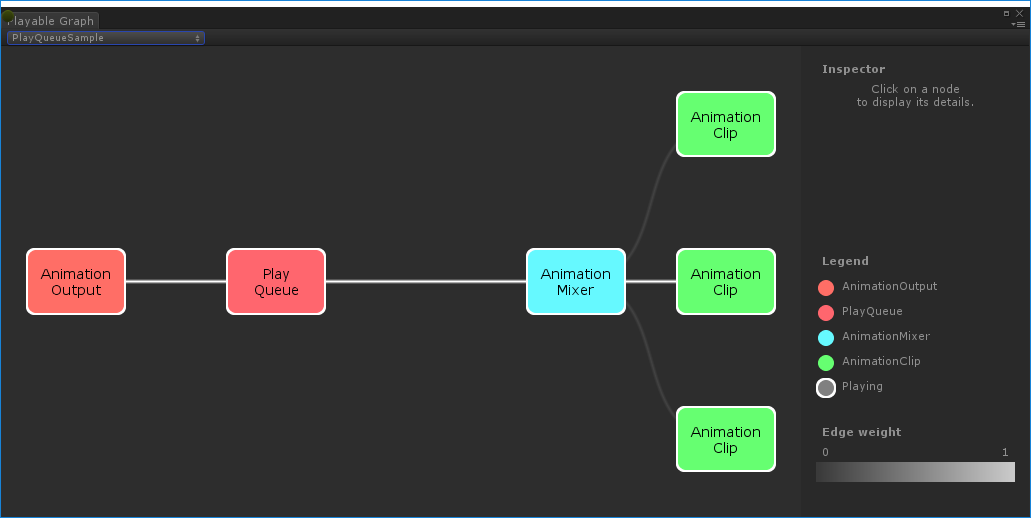
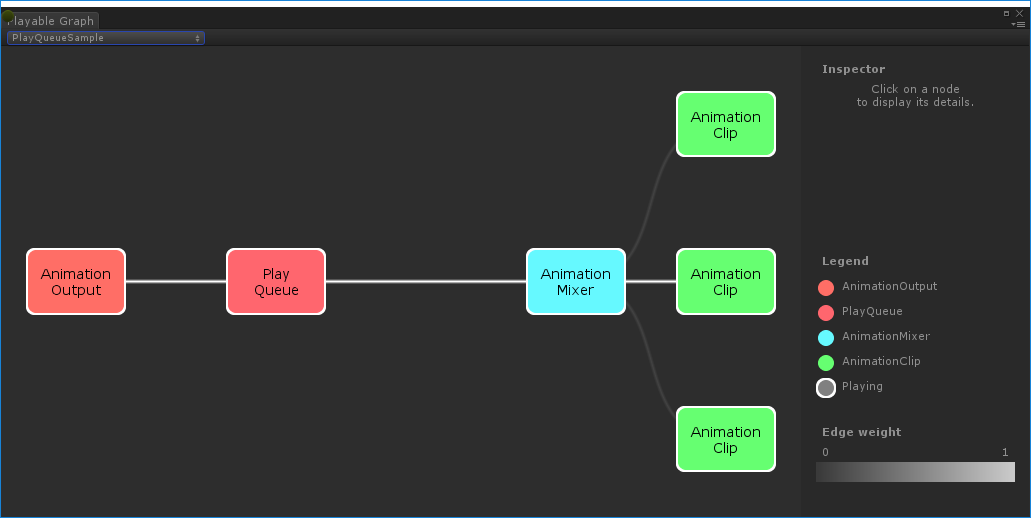
グラフの playable は色のついたノードで示されています。線の色の濃さはブレンドのウェイトを表しています。PlayableGraph Visualizer の詳細については、GitHub を参照してください。
ゲームオブジェクトの 1 つのアニメーションクリップを再生
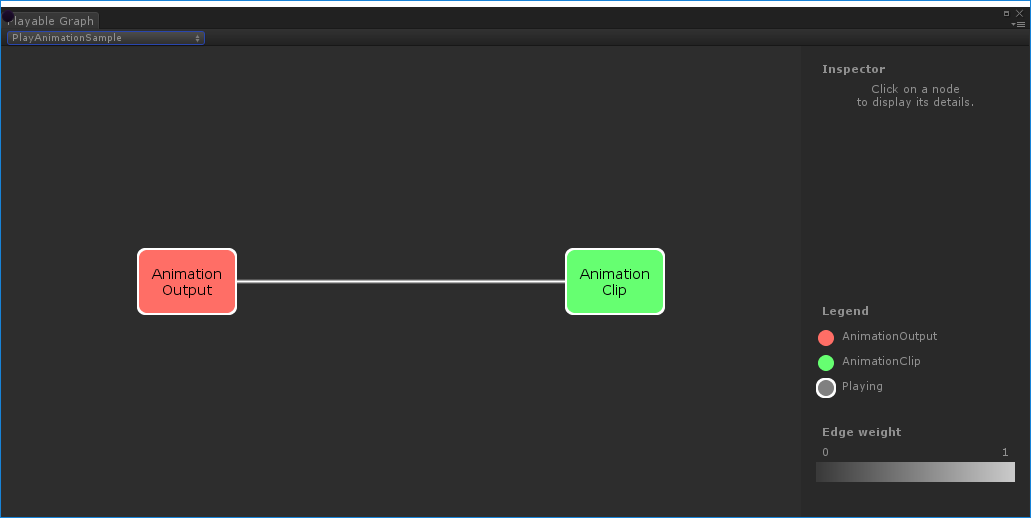
この例は、1 つの playable ノードとリンクする playable 出力を持つ、簡単な PlayableGraph を示しています。playable ノードは 1 つのアニメーションクリップ (クリップ) を再生します。AnimationClipPlayable でアニメーションクリップをラップし、Playables API と互換性を持つようにする必要があります。
using UnityEngine;
using UnityEngine.Playables;
using UnityEngine.Animations;

[RequireComponent(typeof(Animator))]
public class PlayAnimationSample : MonoBehaviour
{
    public AnimationClip clip;
    PlayableGraph playableGraph;

    void Start()
    {
        playableGraph = PlayableGraph.Create();
        playableGraph.SetTimeUpdateMode(DirectorUpdateMode.GameTime);

        var playableOutput = AnimationPlayableOutput.Create(playableGraph, "Animation", GetComponent<Animator>());

        // Wrap the clip in a playable.
        var clipPlayable = AnimationClipPlayable.Create(playableGraph, clip);

        // Connect the Playable to an output.
        playableOutput.SetSourcePlayable(clipPlayable);

        // Plays the Graph.
        playableGraph.Play();
    }

    void OnDisable()
    {
        // Destroys all Playables and PlayableOutputs created by the graph.
        playableGraph.Destroy();
    }
}
以下の例のように、AnimationPlayableUtilities を使用すると、アニメーションの playable の作成と再生を簡易化できます。
using UnityEngine;
using UnityEngine.Playables;
using UnityEngine.Animations;

[RequireComponent(typeof(Animator))]
public class PlayAnimationUtilitiesSample : MonoBehaviour
{

    public AnimationClip clip;
    PlayableGraph playableGraph;

    void Start()
    {
        AnimationPlayableUtilities.PlayClip(GetComponent<Animator>(), clip, out playableGraph);
    }

    void OnDisable()
    {
        // Destroys all Playables and Outputs created by the graph.
        playableGraph.Destroy();
    }
}
アニメーションブレンドツリーの作成
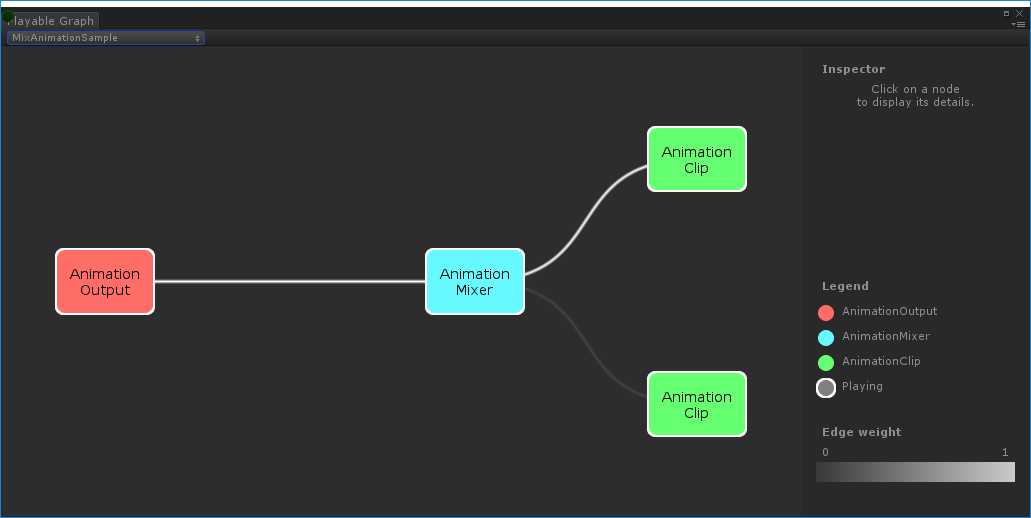
この例は、2 つのアニメーションクリップをブレンドするための AnimationMixerPlayable の使い方を示しています。アニメーションクリップをブレンドする前に、それらを playable でラップする必要があります。これを行うために、AnimationClipPlayable (clipPlayable0 と clipPlayable1) はそれぞれの AnimationClip (clip0 と clip1) をラップします。SetInputWeight() メソッドは、動的に各 playable のブレンドウェイトを調整します。
この例にはありませんが、playable ミキサーと他の playable をブレンドするために AnimationMixerPlayable を使用することもできます。
using UnityEngine;
using UnityEngine.Playables;
using UnityEngine.Animations;

[RequireComponent(typeof(Animator))]
public class MixAnimationSample : MonoBehaviour
{

    public AnimationClip clip0;
    public AnimationClip clip1;
    public float weight;
    PlayableGraph playableGraph;
    AnimationMixerPlayable mixerPlayable;

    void Start()
    {
        // Creates the graph, the mixer and binds them to the Animator.
        playableGraph = PlayableGraph.Create();

        var playableOutput = AnimationPlayableOutput.Create(playableGraph, "Animation", GetComponent<Animator>());

        mixerPlayable = AnimationMixerPlayable.Create(playableGraph, 2);
        playableOutput.SetSourcePlayable(mixerPlayable);

        // Creates AnimationClipPlayable and connects them to the mixer.
        var clipPlayable0 = AnimationClipPlayable.Create(playableGraph, clip0);
        var clipPlayable1 = AnimationClipPlayable.Create(playableGraph, clip1);

        playableGraph.Connect(clipPlayable0, 0, mixerPlayable, 0);
        playableGraph.Connect(clipPlayable1, 0, mixerPlayable, 1);

        // Plays the Graph.
        playableGraph.Play();
    }

    void Update()
    {
        weight = Mathf.Clamp01(weight);
        mixerPlayable.SetInputWeight(0, 1.0f-weight);
        mixerPlayable.SetInputWeight(1, weight);
    }

    void OnDisable()
    {
        // Destroys all Playables and Outputs created by the graph.
        playableGraph.Destroy();
    }
}
PlayableGraphAnimationClip と AnimatorController のブレンド
この例は、AnimationClip を AnimatorController とブレンドするための AnimationMixerPlayable の使い方を示しています。
AnimationClip と AnimatorController をブレンドする前に、それらを playable でラップする必要があります。これを行うために、AnimationClipPlayable (clipPlayable) は AnimationClip (clip) をラップし、AnimatorControllerPlayable (ctrlPlayable) は RuntimeAnimatorController (controller) をラップします。SetInputWeight() メソッドは、動的に各 playable のブレンドウェイトを調整します。
using UnityEngine;
using UnityEngine.Playables;
using UnityEngine.Animations;

[RequireComponent(typeof(Animator))]
public class RuntimeControllerSample : MonoBehaviour
{
    public AnimationClip clip;
    public RuntimeAnimatorController controller;
    public float weight;

    PlayableGraph playableGraph;
    AnimationMixerPlayable mixerPlayable;

    void Start()
    {
        // Creates the graph, the mixer and binds them to the Animator.
        playableGraph = PlayableGraph.Create();

        var playableOutput = AnimationPlayableOutput.Create(playableGraph, "Animation", GetComponent<Animator>());
        mixerPlayable = AnimationMixerPlayable.Create(playableGraph, 2);
        playableOutput.SetSourcePlayable(mixerPlayable);

        // Creates AnimationClipPlayable and connects them to the mixer.
        var clipPlayable = AnimationClipPlayable.Create(playableGraph, clip);
        var ctrlPlayable = AnimatorControllerPlayable.Create(playableGraph, controller);

        playableGraph.Connect(clipPlayable, 0, mixerPlayable, 0);
        playableGraph.Connect(ctrlPlayable, 0, mixerPlayable, 1);

        // Plays the Graph.
        playableGraph.Play();
    }

    void Update()
    {
        weight = Mathf.Clamp01(weight);
        mixerPlayable.SetInputWeight(0, 1.0f-weight);
        mixerPlayable.SetInputWeight(1, weight);
    }

    void OnDisable()
    {
        // Destroys all Playables and Outputs created by the graph.
        playableGraph.Destroy();
    }
}
複数の出力を持つ PlayableGraph の作成
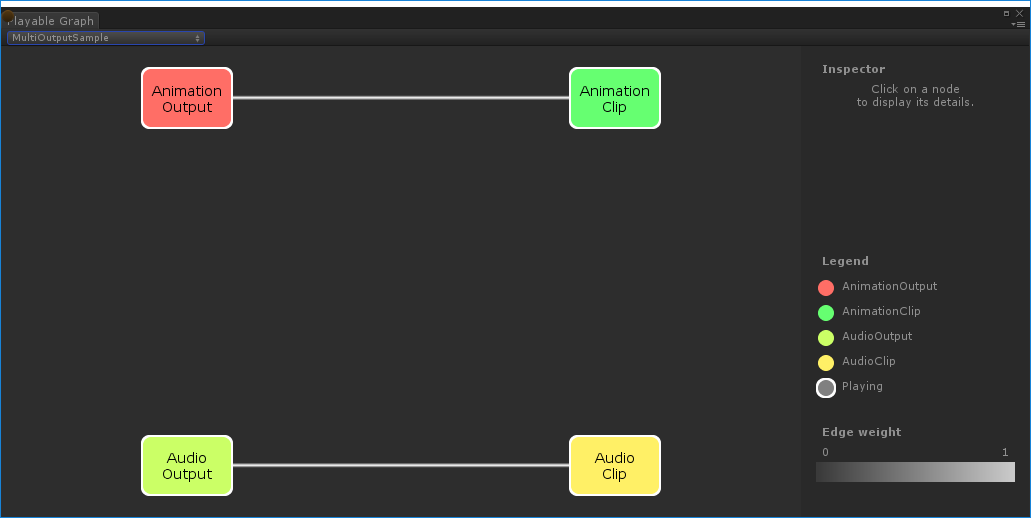
この例は、2 つの異なる playable 出力の型 AudioPlayableOutput と AnimationPlayableOutput を持つ PlayableGraph を作成する方法を示しています。1 つの PlayableGraph は、さまざまな型の playable 出力を多数持つことができます。
さらに、この例は、AudioPlayableOutput に接続した AudioClipPlayable を使って、AudioClip を再生する方法を示しています。
using UnityEngine;
using UnityEngine.Animations;
using UnityEngine.Audio;
using UnityEngine.Playables;

[RequireComponent(typeof(Animator))]
[RequireComponent(typeof(AudioSource))]
public class MultiOutputSample : MonoBehaviour
{
    public AnimationClip animationClip;
    public AudioClip audioClip;
    PlayableGraph playableGraph;

    void Start()
    {
        playableGraph = PlayableGraph.Create();

        // Create the outputs.
        var animationOutput = AnimationPlayableOutput.Create(playableGraph, "Animation", GetComponent<Animator>());

        var audioOutput = AudioPlayableOutput.Create(playableGraph, "Audio", GetComponent<AudioSource>());

        // Create the playables.
        var animationClipPlayable = AnimationClipPlayable.Create(playableGraph, animationClip);
        var audioClipPlayable = AudioClipPlayable.Create(playableGraph, audioClip, true);

        // Connect the playables to an output.
        animationOutput.SetSourcePlayable(animationClipPlayable);
        audioOutput.SetSourcePlayable(audioClipPlayable);

        // Plays the Graph.
        playableGraph.Play();
    }

    void OnDisable()
    {
        // Destroys all Playables and Outputs created by the graph.
        playableGraph.Destroy();
    }
}
PlayableGraphツリーの再生ステートの制御
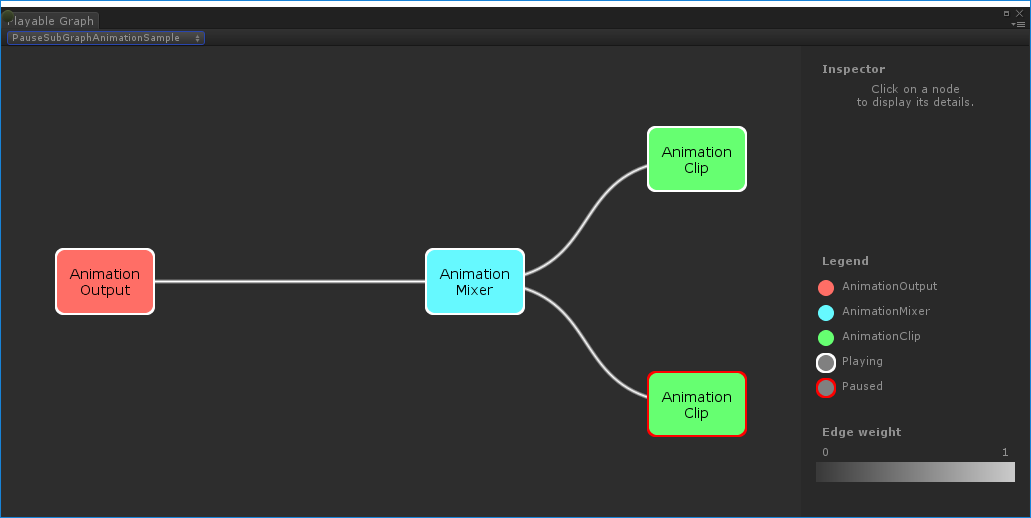
この例で、PlayableGraph ツリーでノードの再生ステートを制御する方法を示しています。Pause() および Play() メソッドは、ツリー全体、ブランチの中の 1 つや、1 つのノードの再生ステートを制御します。
ノードの再生ステートを設定すると、そのステートは、子の再生ステートにかかわらず、すべての子に伝播します。例えば、任意の子ノードが明示的に一時停止だとします。親ノードを再生中に設定すると、そのすべての子ノードも再生中に設定されます。
この例では、PlayableGraph は 2 つのアニメーションクリップをブレンドするミキサーを持っています。AnimationClipPlayable は各アニメーションクリップをラップし、Pause() メソッドは明示的に 2 番目の playable を一時停止させます。すると、2 番目の AnimationClipPlayable も明示的に一時停止します。そのため、その内部時間は進まず、同じ値を出力します。その正確な値は、AnimationClipPlayable が一時停止した特定の時間によります。
using UnityEngine;
using UnityEngine.Playables;
using UnityEngine.Animations;

[RequireComponent(typeof(Animator))]
public class PauseSubGraphAnimationSample : MonoBehaviour
{
    public AnimationClip clip0;
    public AnimationClip clip1;

    PlayableGraph playableGraph;
    AnimationMixerPlayable mixerPlayable;

    void Start()
    {
        // Creates the graph, the mixer and binds them to the Animator.

        playableGraph = PlayableGraph.Create();

        var playableOutput = AnimationPlayableOutput.Create(playableGraph, "Animation", GetComponent<Animator>());

        mixerPlayable = AnimationMixerPlayable.Create(playableGraph, 2);
        playableOutput.SetSourcePlayable(mixerPlayable);

        // Creates AnimationClipPlayable and connects them to the mixer.

        var clipPlayable0 = AnimationClipPlayable.Create(playableGraph, clip0);
        var clipPlayable1 = AnimationClipPlayable.Create(playableGraph, clip1);

        playableGraph.Connect(clipPlayable0, 0, mixerPlayable, 0);
        playableGraph.Connect(clipPlayable1, 0, mixerPlayable, 1);
        mixerPlayable.SetInputWeight(0, 1.0f);
        mixerPlayable.SetInputWeight(1, 1.0f);
        clipPlayable1.Pause();

        // Plays the Graph.
        playableGraph.Play();
    }

    void OnDisable()
    {
        // Destroys all Playables and Outputs created by the graph.
        playableGraph.Destroy();
    }
}
ツリーのタイミングの制御
この例は、PlayableGraph を再生するための Play() メソッドの使い方、playable を一時停止するための Pause() メソッドの使い方、変数を使って手動で playable のローカルタイムを設定する SetTime() メソッドの使い方を示しています。
using UnityEngine;
using UnityEngine.Playables;
using UnityEngine.Animations;

[RequireComponent(typeof(Animator))]
public class PlayWithTimeControlSample : MonoBehaviour
{
    public AnimationClip clip;
    public float time;
    PlayableGraph playableGraph;
    AnimationClipPlayable playableClip;

    void Start()
    {
        playableGraph = PlayableGraph.Create();
        var playableOutput = AnimationPlayableOutput.Create(playableGraph, "Animation", GetComponent<Animator>());

        // Wrap the clip in a playable.
        playableClip = AnimationClipPlayable.Create(playableGraph, clip);

        // Connect the Playable to an output.
        playableOutput.SetSourcePlayable(playableClip);

        // Plays the Graph.
        playableGraph.Play();

        // Stops time from progressing automatically.
        playableClip.Pause();
    }

    void Update ()
    {
        // Control the time manually.
        playableClip.SetTime(time);
    }

    void OnDisable()
    {
        // Destroys all Playables and Outputs created by the graph.
        playableGraph.Destroy();
    }
}
PlayableBehaviour の作成
この例は、PlayableBehaviour public クラスでカスタムの playable を作成する方法を示しています。また、PlayableGraph のノードを制御する PrepareFrame() 仮想メソッドをオーバーライドする方法も紹介しています。カスタムの playable は PlayableBehaviour クラスの他の仮想メソッドをすべて、オーバーライドできます。
この例では、制御されるノードは一連のアニメーションクリップ (clipsToPlay) です。SetInputMethod() は各アニメーションクリップのブレンドウェイトを変更し、確実に 1 度に 1 つのクリップだけが再生するようにします。SetTime() メソッドがローカルタイムを調整し、アニメーションクリップがアクティベートされた時点で、再生が開始します。
using UnityEngine;
using UnityEngine.Animations;
using UnityEngine.Playables;

public class PlayQueuePlayable : PlayableBehaviour
{
    private int m_CurrentClipIndex = -1;
    private float m_TimeToNextClip;
    private Playable mixer;

    public void Initialize(AnimationClip[] clipsToPlay, Playable owner, PlayableGraph graph)
    {
        owner.SetInputCount(1);
        mixer = AnimationMixerPlayable.Create(graph, clipsToPlay.Length);
        graph.Connect(mixer, 0, owner, 0);
        owner.SetInputWeight(0, 1);

        for (int clipIndex = 0 ; clipIndex < mixer.GetInputCount() ; ++clipIndex)
        {
            graph.Connect(AnimationClipPlayable.Create(graph, clipsToPlay[clipIndex]), 0, mixer, clipIndex);
            mixer.SetInputWeight(clipIndex, 1.0f);
        }
    }

    override public void PrepareFrame(Playable owner, FrameData info)
    {
        if (mixer.GetInputCount() == 0)
            return;

        // Advance to next clip if necessary.
        m_TimeToNextClip -= (float)info.deltaTime;

        if (m_TimeToNextClip <= 0.0f)
        {
            m_CurrentClipIndex++;
            if (m_CurrentClipIndex >= mixer.GetInputCount())
                m_CurrentClipIndex = 0;
            var currentClip = (AnimationClipPlayable)mixer.GetInput(m_CurrentClipIndex);

            // Reset the time so that the next clip starts at the correct position.
            currentClip.SetTime(0);

            m_TimeToNextClip = currentClip.GetAnimationClip().length;
        }

        // Adjust the weight of the inputs.
        for (int clipIndex = 0 ; clipIndex < mixer.GetInputCount(); ++clipIndex)
        {
            if (clipIndex == m_CurrentClipIndex)
                mixer.SetInputWeight(clipIndex, 1.0f);
            else
                mixer.SetInputWeight(clipIndex, 0.0f);
        }
    }
}

[RequireComponent(typeof (Animator))]
public class PlayQueueSample : MonoBehaviour
{
    public AnimationClip[] clipsToPlay;
    PlayableGraph playableGraph;

    void Start()
    {
        playableGraph = PlayableGraph.Create();
        var playQueuePlayable = ScriptPlayable<PlayQueuePlayable>.Create(playableGraph);
        var playQueue = playQueuePlayable.GetBehaviour();

        playQueue.Initialize(clipsToPlay, playQueuePlayable, playableGraph);

        var playableOutput = AnimationPlayableOutput.Create(playableGraph, "Animation", GetComponent<Animator>());

        playableOutput.SetSourcePlayable(playQueuePlayable);
        playableOutput.SetSourceInputPort(0);
        playableGraph.Play();
    }

    void OnDisable()
    {
        // Destroys all Playables and Outputs created by the graph.
        playableGraph.Destroy();
    }
}