Entity Inspector reference
When you select an entity in the Hierarchy window, the Inspector displays information about that entity.
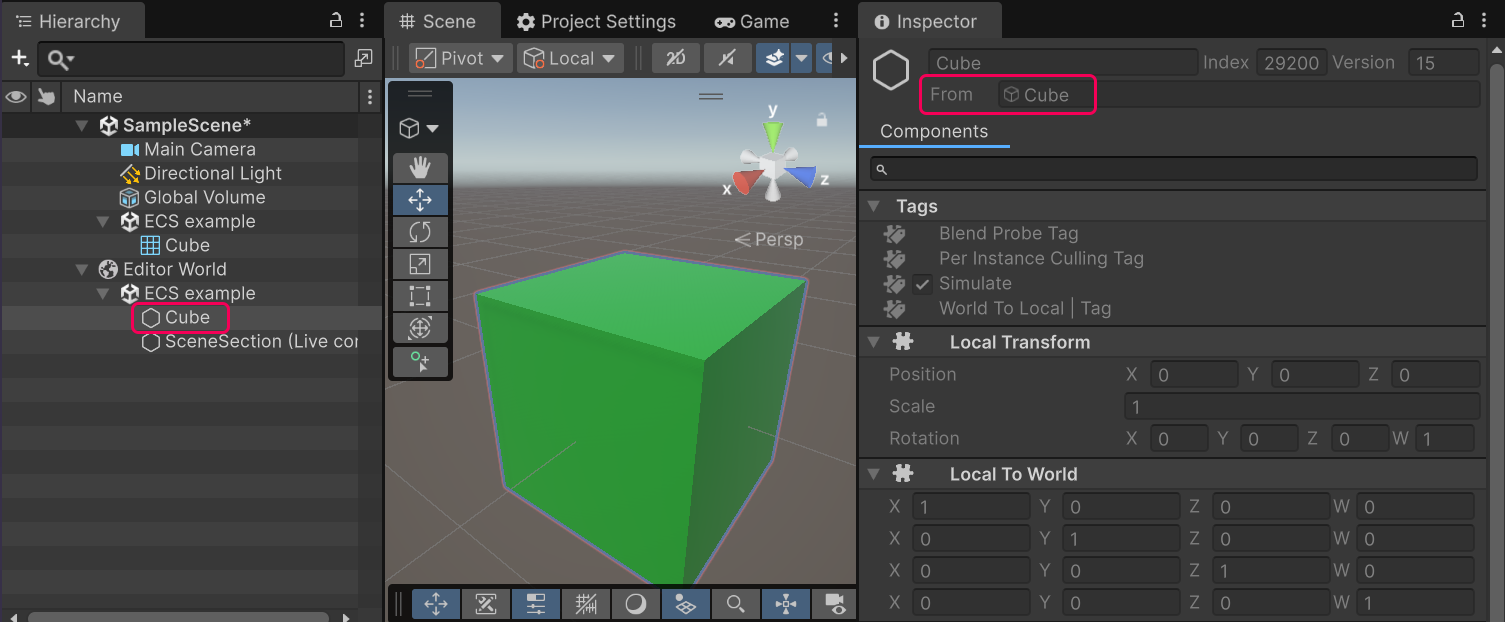
Entity Inspector view with an Entity selected in Hierarchy
To view the authoring data for a GameObject that an entity was converted from, select the GameObject in the From field of the Inspector.
Components tab
The Components tab displays all the components on the selected entity, similar to how the Inspector displays MonoBehaviour components on a GameObject.
The fields in the Components tab have two states:
- In Edit mode, they're read-only.
- In Play mode, you can edit them for debugging purposes. When you exit Play mode, the baking process overrides any changes you made.
The orange or red vertical bars next to fields indicate data that does not persist between the modes (the color of the bar depends on the Editor theme).
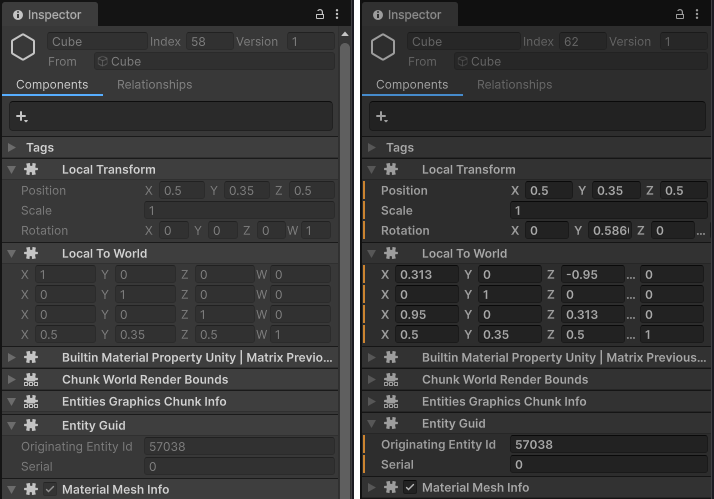
Entity Inspector in Edit mode (left), and Play mode (right). The orange vertical bars in Play mode indicate that Unity destroys the data when you exit Play mode.
Component context menu
To open the context menu of a component, right-click the component header in the Components tab. The menu contains the following items:
| Item | Description |
|---|---|
| Copy | Copies the component data to the clipboard in JSON format. Select All to copy all the fields of the component, or select a field name to copy the value of that field. |
| Open in Hierarchy | Opens the Hierarchy window and filters it to display the entities that have this component type. The filter uses the t: token with the full type name, for example t:Unity.Transforms.LocalTransform. For a shared component, the filter displays all the entities that have the shared component type, regardless of its value. For more information, refer to Search for entities. |
The context menu of a dynamic buffer contains only the Copy item. Its submenu contains the indices of the buffer elements instead of field names. Tag components have no context menu.